Global buyers are reassessing motor efficiency, control, and supply reliability. The reason is measurable. The International Energy Agency estimates that electric motor systems consume nearly half of global electricity. IEA-4E research also identifies motor-driven equipment as a major industrial efficiency opportunity. The U.S. Department of Energy reports that properly selected, efficient motors can reduce lifecycle energy costs, especially in pumps, fans, conveyors, and compressors.
“Electric motors consume more than 40% of the world’s electrical energy,” says Dr. Ali Emadi, a widely recognized electric-drive and power-electronics expert. His observation explains why a Low Voltage Dc Motor deserves more than a simple price comparison. A 24V motor may look suitable on a specification sheet, yet stall torque, duty cycle, thermal rise, brush life, and controller compatibility can change the result completely.
This guide examines top Low Voltage Dc Motor manufacturers for global buyers. It considers engineering capability, production consistency, certifications, customization, testing, and after-sales support. IEC 60034 performance requirements, documented quality systems, and traceable test data are useful reference points. They are not a guarantee.
Real operating conditions matter. A warehouse conveyor may start with a heavy load at 5°C. A medical device may need quiet operation for thousands of hours. A battery-powered vehicle may punish a motor during repeated acceleration. Small details become expensive failures.
Some market forecasts show strong growth, but their definitions differ. That weakness deserves attention. Buyers should verify voltage range, rated speed, gearbox options, ingress protection, and sample-test results before choosing a supplier. The cheapest quotation is often only the beginning of the calculation.
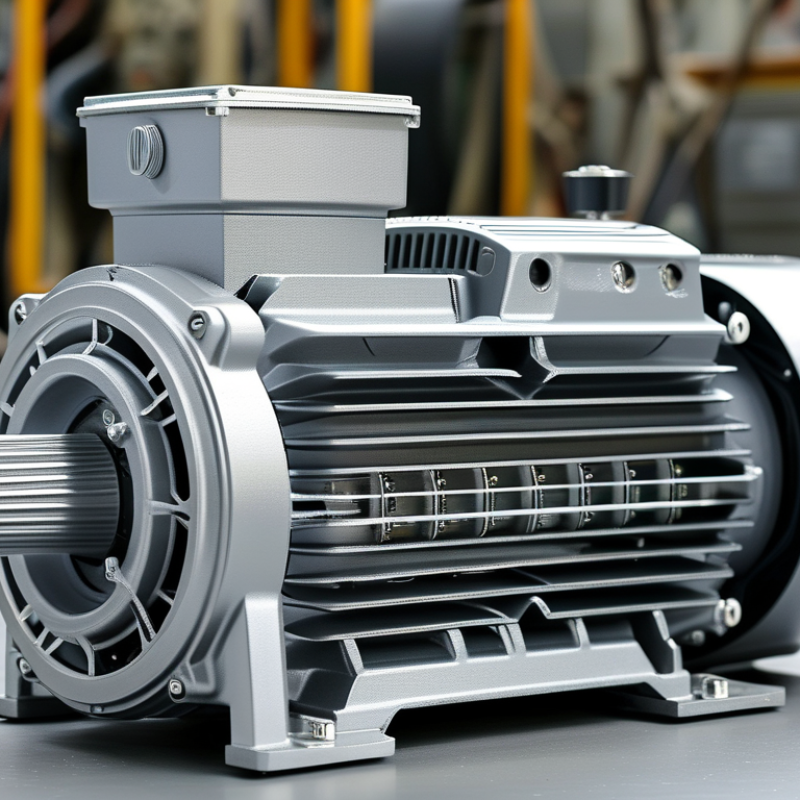
Top Low Voltage DC Motor Manufacturers for Global Buyers
Low-voltage DC motors commonly operate from 12 to 48 VDC. The voltage is low, but current can become substantial under heavy loads. A 1,200-watt motor at 24 V draws about 50 amps before losses. Cable size, connectors, fuses, and heat management therefore deserve careful attention.
The International Energy Agency estimates that electric motor systems consume roughly 53% of global electricity. This figure comes from its energy-efficiency analysis and shows why motor selection matters beyond purchase price. In practical testing, brushed motors remain attractive for simple actuators, small pumps, and intermittent equipment. Their mechanical brushes simplify control and reduce initial cost. They also wear, create electrical noise, and need periodic replacement. That maintenance burden is easy to underestimate.
Brushless DC designs use electronic commutation instead of physical brushes. They usually offer longer service life, quieter operation, and better efficiency during continuous duty. The trade-off is a controller, sensor strategy, and more demanding troubleshooting. A 2023 U.S. Department of Energy motor-systems assessment also highlights the importance of matching motors to actual load profiles, rather than relying only on rated power. This is where specifications can mislead. A motor labeled “48 V” may perform poorly with voltage sag, cold batteries, or repeated starts. Selection is not automatic. Verify torque, speed, duty cycle, stall current, ingress protection, and controller compatibility before approving a supplier.
Technical comparison guide for evaluating low-voltage DC motor suppliers, designs, and application suitability without identifying individual companies or brands.
| Motor Design | Typical Voltage Range | Commutation Method | Typical Control Requirements | Maintenance Profile | Key Advantages | Common Applications | Buyer Evaluation Points |
|---|---|---|---|---|---|---|---|
| Brushed Permanent-Magnet DC Motor | 12–48 VDC | Mechanical commutation through brushes and a commutator | Simple PWM controller, polarity reversal circuit, or basic DC drive | Periodic brush and commutator inspection; service life depends on current, speed, load, and duty cycle | Low control complexity, high starting torque, straightforward speed reversal, and generally lower system cost | Small pumps, actuators, fans, conveyors, valves, seating systems, and battery-powered equipment | Brush material, rated current, stall-current protection, brush life, noise, duty cycle, and gearhead compatibility |
| Brushless DC Motor | 12–48 VDC | Electronic commutation using permanent magnets and a solid-state controller | BLDC controller or inverter; Hall sensors or sensorless control may be used | Minimal commutator wear; bearings and insulation system remain primary service considerations | Longer operating life, reduced electrical wear, good efficiency, high speed capability, and precise controllability | Cooling fans, medical equipment, robotics, automation, pumps, power tools, and mobile systems | Controller matching, phase current, Hall-sensor configuration, electromagnetic compatibility, thermal limits, and firmware support |
| Coreless Brushed DC Motor | 6–24 VDC; some designs extend to 48 VDC | Mechanical commutation with a lightweight ironless rotor | PWM speed control or compact DC drive; current limiting is recommended | Brush wear remains the main limitation; high acceleration can increase commutator stress | Low rotor inertia, rapid acceleration, low cogging, and smooth response at small sizes | Portable instruments, miniature actuators, optical devices, laboratory equipment, and precision mechanisms | Rotor inertia, transient current, brush life, thermal dissipation, shaft alignment, and low-load operating behavior |
| Geared Brushed DC Motor | 12–48 VDC | Brushed motor combined with spur, planetary, or worm reduction gearing | PWM controller, relay control, or H-bridge for bidirectional operation | Motor brushes and gearbox lubrication or wear components require consideration | High output torque, compact packaging, simple control, and broad speed-reduction options | Linear actuators, lift mechanisms, access systems, instrument drives, and compact automation | Gear ratio, continuous and peak torque, backlash, output-shaft load, duty cycle, holding behavior, and gearbox noise |
| Geared Brushless DC Motor | 12–48 VDC | Electronic commutation combined with a reduction gearbox | Dedicated BLDC controller, inverter, and optional position or speed feedback | Low commutation wear; gearbox, bearings, seals, and thermal management determine service requirements | Long service life, strong torque density, controllable speed, and suitability for repeated duty cycles | Collaborative machinery, automated handling, pumps, AGV subsystems, and battery-powered equipment | Controller-motor pairing, gearbox efficiency, peak torque, regenerative behavior, feedback type, and enclosure rating |
| Permanent-Magnet DC Servo Motor | 12–48 VDC | Usually brushed or brushless commutation with closed-loop feedback | Servo drive with encoder, Hall sensors, tachometer, or other position/speed feedback | Depends on motor construction; feedback device alignment and cable protection are also important | Accurate speed and position control, repeatability, rapid dynamic response, and controlled torque | Robotics, positioning stages, laboratory automation, printing equipment, and precision actuators | Encoder resolution, continuous torque, peak torque, control-loop bandwidth, braking method, and feedback compatibility |
Technical note: The 12–48 VDC range is commonly used in battery systems, mobile equipment, industrial controls, and extra-low-voltage machinery. Actual voltage limits, speed, torque, current, efficiency, noise, and service life vary by motor size, winding, load profile, controller, cooling method, and mechanical configuration. Always verify the manufacturer’s datasheet and test results for the intended duty cycle.
: They commonly operate between 12 and 48 VDC. Voltage alone does not determine performance. Load, speed, and duty cycle also matter.
A 1,200-watt motor at 24 V draws about 50 amps before losses. Starting and stall current can be much higher. Use suitable cables, connectors, fuses, and heat protection.
Brushed motors usually cost less initially. They suit simple actuators, small pumps, and intermittent equipment. Their control system is often straightforward. Brushes wear over time.
Brushless motors suit continuous operation and quieter equipment. They usually provide longer service life and better efficiency. They require electronic commutation and a compatible controller. Troubleshooting can be more demanding.
No. A 48 V motor may perform poorly under voltage sag. Cold batteries can also reduce available performance. Repeated starts may create excessive heat and current. The label is not enough.
Check torque, speed, stall current, and duty cycle. Review ingress protection and controller compatibility. Also confirm encoder options, mounting patterns, and shaft tolerances. Small details can delay a project.
Request sample test reports and traceable quality records. Confirm replacement availability for several years. Check noise, gearbox backlash, connector details, and lead times. Catalog claims may be incomplete.
Compare application experience, technical support, and production consistency. Review torque curves instead of rated power alone. Ask whether winding, bearing, or feedback changes are possible. Customization may increase cost and development time.
Yes. Heat can build inside a sealed enclosure. A motor may pass a bench test and fail during continuous operation. Measure temperature under the real load profile. Heat changes everything.
No shortlist is flawless. Specifications can mislead, and operating conditions can change. Test the motor with actual loads, wiring, batteries, and controllers. Some uncertainty remains.
Low Voltage Dc Motor systems, typically operating at 12–48 VDC, are widely used in automation, mobility equipment, consumer products, and compact industrial machinery. Buyers can choose brushed designs for simplicity and cost efficiency or brushless designs for longer service life, lower maintenance, and improved control. When comparing options, review IEC 60034 alignment, IP54–IP68 protection levels, thermal performance, and efficiency of 80% or higher. Key technical metrics include rated torque, operating speed, duty cycle, acoustic noise, starting performance, and an expected service life of around 10,000 hours under suitable conditions.
For global procurement, buyers should confirm CE and UL compliance where applicable, along with testing documentation, customization capabilities, minimum order quantities, and realistic lead times. A complete total cost of ownership comparison should include the purchase price, control electronics, installation, energy use, maintenance, replacement intervals, shipping, and warranty support. Selecting a motor based on the full application profile rather than price alone helps improve reliability, safety, and long-term operating value.

 Viterra Motor