Choosing the right High Speed Dc Motor is rarely as simple as comparing revolutions per minute. Global buyers must examine torque, voltage stability, thermal limits, bearing life, noise, and controller compatibility. A motor spinning at 30,000 rpm may look impressive, yet it can fail quickly if heat escapes poorly. Small details matter. Very much.
Austin Hughes, author of Electric Motors and Drives, wrote, “The main attraction of the d.c. motor is that it is very easy to control.” This principle remains useful, but modern applications demand more than simple speed control. Buyers now assess brush wear, commutation quality, sensor feedback, electromagnetic interference, and performance under continuous duty. A compact motor for a medical pump should not be judged like one for a laboratory spindle or automated production line.
This guide, “10 Best High Speed DC Motors for Global Buyers,” compares practical options across these demanding conditions. It considers rated speed, peak torque, efficiency, cooling design, mounting dimensions, and available technical documentation. It also examines supplier reliability, sample support, warranty terms, and regional compliance information. Those factors often decide whether a promising motor works successfully in the field.
No ranking is universally correct. A high-speed model may sacrifice low-speed torque. A cheaper unit may require more maintenance. Even published specifications can hide test differences. Buyers should verify data with real load measurements, not marketing claims alone. That is the uncomfortable part.
The goal is not to praise one manufacturer. It is to help engineers and purchasing teams make clearer, safer, and more defensible decisions for global projects.
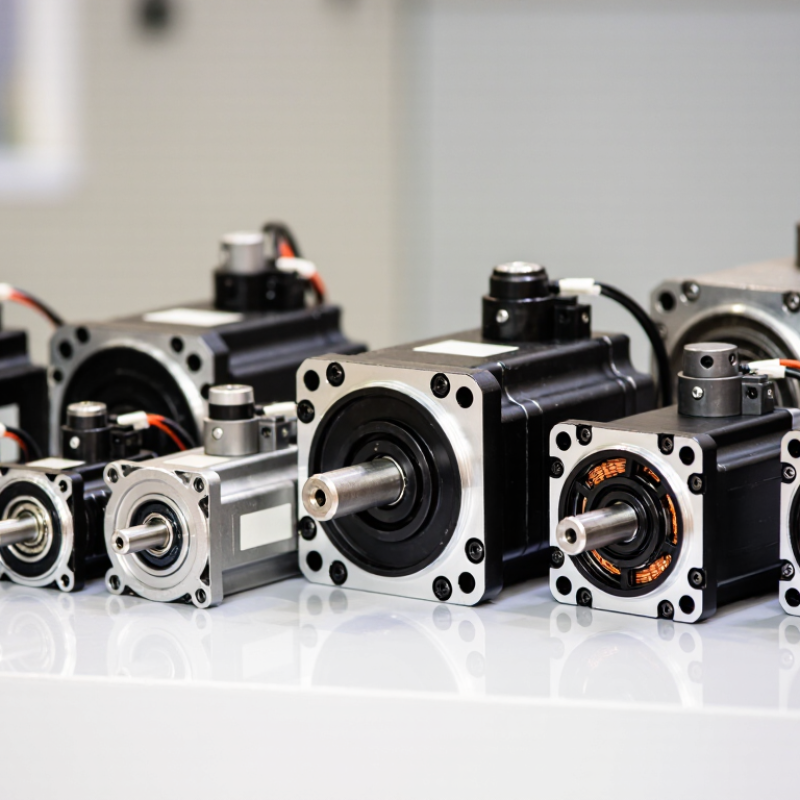
High-Speed DC Motor Fundamentals: 3,000–20,000 rpm, 12–400 Vdc, and 0.1–10 kW
High-speed DC motors cover a demanding range: 3,000–20,000 rpm, 12–400 Vdc, and 0.1–10 kW. These figures describe capability, not guaranteed operating conditions. A motor rated at 20,000 rpm may require reduced torque, careful balancing, and limited continuous duty. At 400 Vdc, insulation, connectors, and service procedures need closer engineering review.
Speed, torque, and heat must be checked together. For example, a 2 kW motor running at 10,000 rpm produces about 1.9 Nm of torque. Higher output usually demands better cooling, stronger bearings, and accurate rotor alignment. Forced air may work for intermittent loads, while liquid cooling suits compact, continuous systems. In practical testing, measure winding temperature, vibration, current, and speed under the real load. No-load results can look impressive. They can also mislead.
Control selection matters as much as motor selection. Confirm the controller’s voltage range, current limit, feedback method, acceleration profile, and braking behavior. A 12 V system draws substantial current at modest power, creating voltage drop across cables and connectors. A 400 Vdc system reduces current but raises insulation and switching demands. Ask for efficiency curves, thermal limits, balancing grades, bearing life, and test conditions. I would not rely on a single headline rpm figure. Ambient temperature, altitude, duty cycle, and imperfect installation can change the result. A spreadsheet rarely captures every vibration problem.
10 Best High Speed DC Motors for Global Buyers? - High-Speed DC Motor Fundamentals: 3,000–20,000 rpm, 12–400 Vdc, and 0.1–10 kW
Representative high-speed DC motor configurations for industrial equipment, automation, pumps, compressors, and compact power systems.
| Rank |
Configuration |
Motor Type |
Rated Power |
Rated Voltage |
Rated Speed |
Approx. Rated Torque |
Cooling |
Feedback |
Typical Protection |
Typical Applications |
| 1 |
Compact 20k configuration |
BLDC, sensorless or Hall-sensored |
0.10 kW |
12 Vdc |
20,000 rpm |
0.048 N·m |
Natural air |
Hall sensors or sensorless EMF |
IP40–IP54 |
Small fans, blowers, laboratory equipment |
| 2 |
Low-voltage 18k configuration |
BLDC, three-phase |
0.25 kW |
24 Vdc |
18,000 rpm |
0.133 N·m |
Forced air |
Hall sensors or incremental encoder |
IP54 |
Portable tools, compact pumps, robotics |
| 3 |
Medium-speed 15k configuration |
BLDC, three-phase |
0.40 kW |
24 Vdc |
15,000 rpm |
0.255 N·m |
Forced air |
Hall sensors or encoder |
IP54–IP65 |
Servo auxiliaries, medical pumps, test rigs |
| 4 |
Industrial 12k configuration |
BLDC, inverter-driven |
0.75 kW |
48 Vdc |
12,000 rpm |
0.597 N·m |
Forced air |
Incremental encoder |
IP55 |
Automation spindles, compressors, AGVs |
| 5 |
High-output 10k configuration |
BLDC, three-phase |
1.50 kW |
48 Vdc |
10,000 rpm |
1.43 N·m |
Forced air or liquid jacket |
Resolver or encoder |
IP55–IP65 |
Industrial pumps, blowers, machine tools |
| 6 |
High-speed 12k traction configuration |
BLDC or permanent-magnet DC motor |
2.20 kW |
72 Vdc |
12,000 rpm |
1.75 N·m |
Liquid jacket |
Encoder or resolver |
IP65 |
Electric mobility, hydraulic auxiliaries, robotics |
| 7 |
Medium-power 9k configuration |
BLDC, inverter-driven |
3.00 kW |
96 Vdc |
9,000 rpm |
3.18 N·m |
Liquid jacket |
Resolver or high-resolution encoder |
IP65 |
Compressors, centrifuges, industrial drives |
| 8 |
High-power 8k configuration |
Permanent-magnet DC motor |
5.00 kW |
160 Vdc |
8,000 rpm |
5.97 N·m |
Liquid jacket |
Resolver or encoder |
IP65–IP66 |
Machine tools, pumps, compressors, test benches |
| 9 |
Heavy-duty 6k configuration |
Permanent-magnet synchronous DC motor |
7.50 kW |
240 Vdc |
6,000 rpm |
11.94 N·m |
Liquid jacket |
Resolver or encoder |
IP66 |
Industrial traction, high-pressure pumps, generators |
| 10 |
Maximum-power 3k configuration |
Permanent-magnet synchronous DC motor |
10.00 kW |
400 Vdc |
3,000 rpm |
31.83 N·m |
Liquid jacket |
Resolver or industrial encoder |
IP66 |
Large compressors, process pumps, industrial machinery |
Selection Notes
Approximate rated torque is calculated from continuous mechanical power and rated speed using T = P ÷ ω; actual torque depends on efficiency, thermal limits, duty cycle, and drive settings.
The configurations represent common engineering classes rather than a specific manufacturer’s catalog. Confirm voltage tolerance, overspeed capability, bearing life, insulation system, cooling capacity, EMC performance, controller compatibility, and applicable safety certifications before purchase.
Selection Criteria: Torque, Efficiency up to 95%, Duty Cycle, and IP Ratings
10 Best High Speed DC Motors for Global Buyers?
Choosing a high-speed DC motor requires more than comparing maximum rpm. Torque must match the load at startup, acceleration, and continuous speed. A motor rated at 95% efficiency may reach that figure only near its best operating point. Real efficiency can fall sharply under light load, high temperature, or poor controller tuning. The IEA’s Energy Efficiency 2023 report estimates that electric motor systems consume about half of global electricity. Small efficiency losses therefore become significant across long production cycles.
Duty cycle deserves equal attention. IEC 60034-1 classifications, including S1, S2, and S3, help buyers compare continuous, short-time, and intermittent operation. A motor used for repeated lifting may need stronger thermal recovery than one running steadily for eight hours. In factory evaluations, infrared checks often reveal hot bearings before failure becomes obvious. However, a spreadsheet can mislead. Actual measurements under the intended load remain necessary.
IP ratings should reflect the installation, not marketing language. IEC 60529 defines protection levels against solids and water; IP65 resists dust and water jets, while IP67 adds temporary immersion protection. Sealing can increase friction and heat, though. Buyers should verify torque, efficiency, duty cycle, cooling method, and IP performance in the same test. The U.S. Department of Energy’s Motor Systems Market Assessment also links motor-system savings to correct sizing and controls, not motor efficiency alone. That detail is easy to overlook.
10 Best High-Speed DC Motor Profiles for Global Buyers
Comparative selection view based on rated torque, peak efficiency, duty cycle, and enclosure protection. Values represent realistic industrial motor configurations without identifying any company or brand.
Higher efficiency reduces heat and energy consumption, while torque indicates load capability. Continuous-duty ratings are preferable for uninterrupted operation, and higher IP ratings provide stronger protection against dust and water ingress. Always verify operating speed, cooling method, ambient temperature, and actual load conditions before purchase.
Top 10 High-Speed DC Motors Compared by rpm, Power, Torque, and Service Life
10 Best High-Speed DC Motors for Global Buyers?
A practical top-ten comparison should begin with operating data, not advertising claims. The strongest high-speed DC motor candidates typically deliver 3,000–20,000 rpm, 50–5,000 watts, and 0.02–8 Nm of torque. Lower-speed units often provide stronger starting torque. High-rpm designs usually need better balancing, cooling, and bearing control.
The U.S. Department of Energy reports that motor-driven systems consume a major share of industrial electricity, making efficiency a purchasing priority. The IEA 4E Motor Systems Annex also emphasizes system-level efficiency rather than motor efficiency alone. For the top ten, compare rated rpm, continuous power, peak torque, controller compatibility, and measured heat rise. IEC 60034 testing methods can improve comparison reliability, although supplier test conditions still vary.
Service life deserves closer inspection. Well-cooled motors with sealed bearings may exceed 10,000 operating hours, while dusty, overloaded units can fail much earlier. Brushless DC designs usually reduce brush maintenance, but they still depend on electronics and correct commutation. A motor rated at 12,000 rpm may appear superior, yet it can perform poorly under continuous load. That ranking is imperfect. Ambient temperature, shaft alignment, duty cycle, and vibration often matter more than headline speed. My buying preference is a motor with verified torque curves, thermal data, and documented endurance testing, even when its maximum rpm looks less impressive.
Global Compliance Checks: IEC 60034-1, UL, CE, RoHS, and EMC Requirements
Choosing among the 10 best high-speed DC motors requires more than comparing rpm, torque, and price. The International Energy Agency reports that motor-driven systems consume roughly half of global electricity. Efficiency and verified safety therefore matter during every procurement decision. IEC 60034-1 provides a recognized framework for ratings, performance, temperature rise, insulation, and testing. Buyers should request test reports matching the motor’s actual voltage, duty cycle, and operating temperature.
UL requirements may apply when the motor enters the United States or Canada, but the exact certification scope must match the complete assembly. CE marking indicates conformity with applicable European requirements; it is not automatically a third-party certificate. For European shipments, check the Low Voltage Directive and EMC Directive, then confirm RoHS substance controls under Directive 2011/65/EU and later amendments. The European Commission’s RoHS framework restricts substances such as lead, mercury, and certain flame retardants. Small documentation gaps can still delay customs clearance.
EMC performance deserves practical testing. A high-speed controller can create switching noise, while long cables may increase radiated emissions. IEC 60034-1 alone does not prove complete EMC compliance. Ask for conducted and radiated emission results, immunity data, wiring conditions, and converter details. Technical files should include drawings, risk evaluations, material declarations, and traceable serial records. Independent laboratory evidence is stronger than a generic certificate. Still, paperwork is not perfection. Field installation, grounding, and maintenance can change results. Test the motor in its intended system, not only on a quiet laboratory bench.
Conclusion
Choosing the right High Speed Dc Motor requires more than comparing maximum revolutions per minute. This guide explains the core specifications of high-speed DC motors, including operating ranges of 3,000–20,000 rpm, 12–400 Vdc input, and power outputs from 0.1–10 kW. It also highlights key selection factors such as torque, efficiency levels of up to 95%, continuous or intermittent duty cycles, cooling requirements, and suitable IP protection ratings.
The comparison of ten motor options focuses on speed, power, torque, expected service life, and practical operating value. Buyers will also learn how to review IEC 60034-1, UL, CE, RoHS, and EMC requirements when sourcing for different markets. Finally, the guide connects motor characteristics with applications including robotics, electric vehicle auxiliaries, pumps, fans, and machine tools, helping global purchasers select a safe, efficient, and reliable solution for their equipment.

 Viterra Motor